Every roll of packaging tape or masking tape on a shelf started as a wide jumbo log. Turning that log into hundreds of clean, uniform, ready-to-sell rolls is the job of a BOPP tape slitting rewinding machine. If you run a tape converting unit, or you are about to set one up, the machine you choose decides your output quality, your wastage and your daily production numbers.
This guide explains how the process works, which machine types exist, what specifications matter, and how to evaluate suppliers before you buy.
What Is a BOPP Tape Slitting Rewinding Machine?
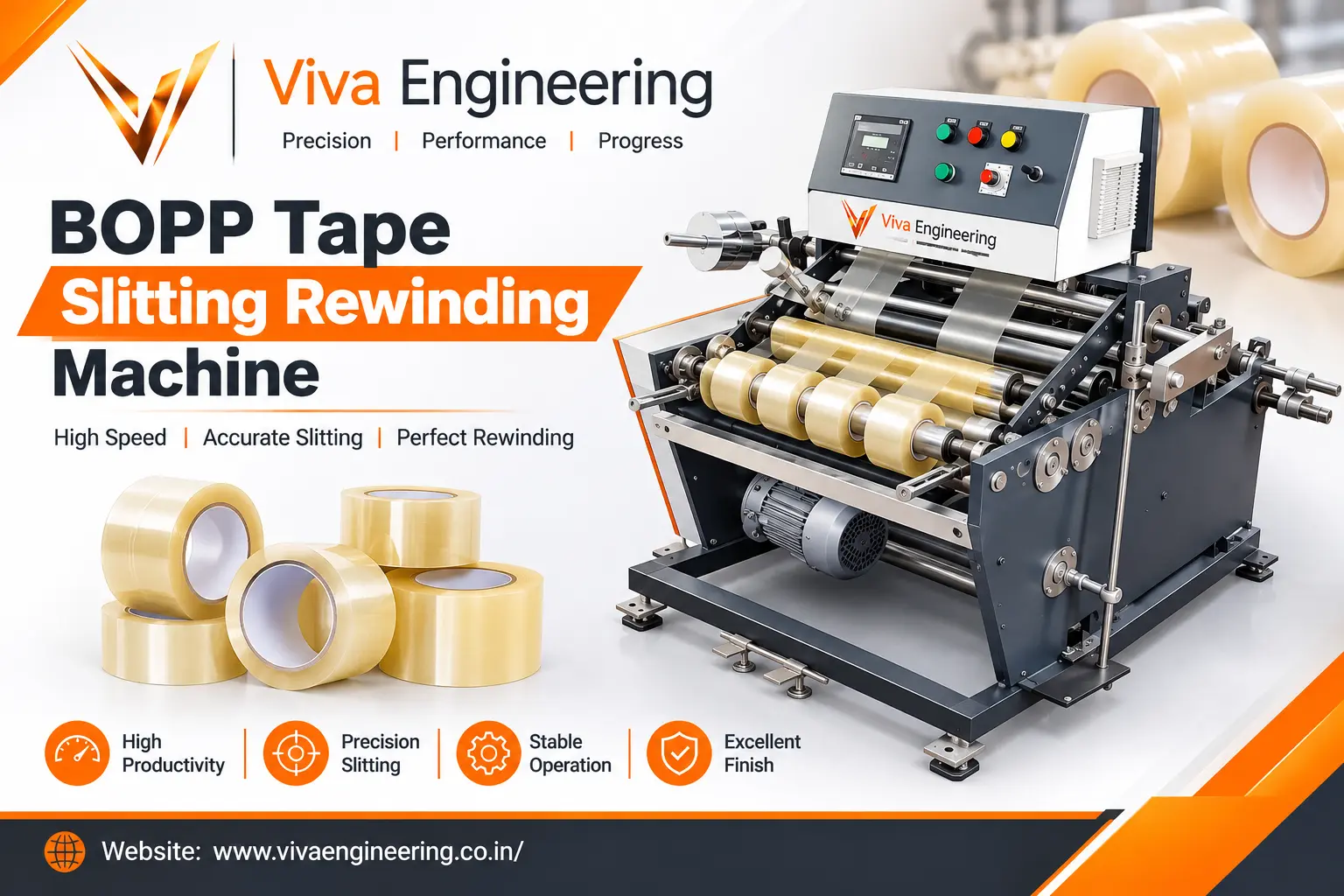
A BOPP tape slitting rewinding machine takes a large adhesive-coated jumbo log (BOPP film coated with adhesive) and cuts it lengthwise into narrow rolls of the required width, such as 12 mm, 24 mm, 48 mm or 72 mm. It then winds those rolls onto cores, ready for packing.
BOPP (biaxially oriented polypropylene) film is strong, clear and widely used for carton sealing tape. The same slitting principle applies to printed tape, double-sided tape and many specialty adhesive products. Many manufacturers also use the same equipment class as a masking tape rewinding machine or a general film slitter rewinder machine, with changes in blades, tension control and core handling.
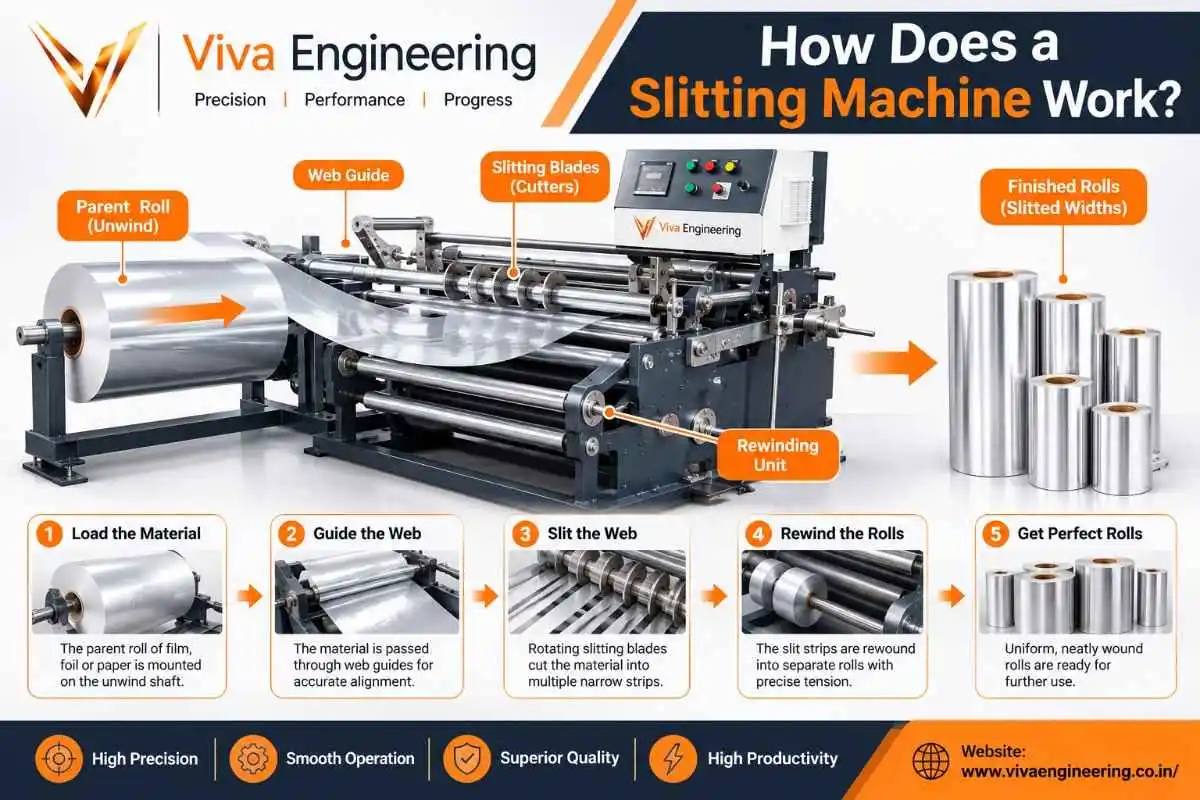
How Jumbo Tape Logs Are Slit
Understanding the process helps you judge machine quality.
Loading the log: The jumbo log is mounted on a shaft or chuck at the unwinding end.
Cutting: The log is cut into a series of rolls, usually using a rotating blade (log-slitting type) or a series of blades across a running web.
Winding: Each narrow roll is wound onto a core or shaft with controlled tension so edges stay straight and the roll is firm.
Unloading: Finished rolls are removed and sent to packing, or to a cutting stage if they are wound as long logs.
The key point is that adhesive tape is sticky and sensitive. Poor tension or a dull blade causes edge telescoping, adhesive smearing, burrs and loose rolls.
Types of BOPP Tape Slitting Rewinding Machines
1. Manual and Semi-Automatic Log Slitting Machines
These are common for small and mid-sized units. The operator loads the log, positions the blade and the machine cuts the log into rolls. They are affordable and simple to maintain, but output depends on operator skill.
2. Fully Automatic Tape Slitting and Rewinding Machines
These handle loading, cutting and unloading with minimal manual work. They suit high-volume converters who need consistent roll width and faster cycle times.
3. Web Slitting Rewinders for Tape Film
In this design the film web runs through blades (razor, shear or score) and is rewound on multiple shafts. It is used when tape film is slit before or during conversion, and for printed or specialty tapes.
4. Specialty Machines
Some units are built for double-sided tape, masking tape or very narrow widths. These need finer tension control and often special blade holders.
Speed, Core Sizes and Width Range
When comparing machines, check these specifications first.
Maximum jumbo log width: Common sizes range from 1,000 mm to 1,600 mm. Match this to your coating line output.
Slit width range: Confirm the minimum and maximum widths the machine can cut accurately.
Core sizes: Most tape uses 1 inch (25 mm) or 3 inch (76 mm) cores. Make sure the machine supports the core sizes you use and can change over quickly.
Speed and output: Ask for rolls per minute or log cycles per hour, not just a headline speed. Actual output depends on width, adhesive type and core handling.
Drive and control: Servo or inverter-driven systems with a PLC give better repeatability than basic mechanical drives.
Roll diameter: Check the maximum finished roll diameter and unwind diameter your product range needs.
A machine that looks fast on paper but needs long changeovers between widths will often lose to a slightly slower model with quick setup.
Blade Options for Tape Slitting
Blade choice has a direct effect on edge quality.
Rotary circular blades: Common for log cutting. They give clean cuts when kept sharp and set at the correct angle.
Razor blades: Suitable for thin film and lighter tapes. They are economical but need frequent replacement.
Shear (top and bottom) knives: Offer very clean edges and long life. They are often used on higher-end film slitting rewinders.
Teflon-coated or special-coated blades: Helpful for adhesive tapes because they reduce glue build-up on the blade.
Ask your supplier about blade life, replacement cost, and how easily the blade can be re-sharpened or swapped. For adhesive products, a blade that resists glue build-up saves a lot of downtime.
Tension Control and Roll Quality
Even with the right blade, the roll can fail if tension is wrong. Good machines offer:
Adjustable winding tension that tapers as the roll builds
Stable shaft or chuck alignment to avoid wobble
Smooth start and stop to avoid tape stretch or slack
Poor tension control leads to telescoped rolls, soft rolls, wrinkles and uneven edges, all of which cause customer rejections.
Output Quality Checks to Run Before Buying
Before finalizing a purchase, ask for a trial run with your own jumbo log and check:
Edge quality: No burrs, glue stringing or edge damage
Width accuracy: Measure several rolls across the run
Roll firmness: Rolls should be firm without crushing the core
Core alignment: Edges should be flush and straight
Repeatability: Rolls from the start and end of the run should match
Changeover time: Time how long it takes to switch width or core size
A reliable supplier will welcome a trial run and share the results openly.
How to Choose the Right BOPP Tape Slitting Rewinding Machine
Use this checklist when comparing options.
Define your product range: Widths, lengths, core sizes and tape types (BOPP, masking, double-sided, printed).
Estimate daily volume: Choose a machine that meets your target output with some room to grow.
Pick the automation level: Balance labour cost, budget and consistency needs.
Check build quality: Look at frame rigidity, shaft finish, bearing quality and electrical components.
Ask about spares and service: Confirm availability of blades, belts and electrical parts, and how fast support responds.
Compare the total cost: Include blades, power consumption, maintenance and operator training, not just the purchase price.
Request references: Speak to existing customers running similar tape.
Questions to Ask a Slitting Rewinding Machine Manufacturer
Can you customize the machine for my log width and core sizes?
What is the delivery time, and is installation and training included?
What warranty do you provide, and what does it cover?
Which spare parts should I stock?
Can I see the machine running before dispatch?
An experienced slitting rewinding machine manufacturer will answer these clearly and offer a machine matched to your actual production, not a generic model.
Maintenance Tips to Protect Your Investment
Clean blades and shafts regularly to remove adhesive residue
Lubricate moving parts on schedule
Inspect and replace worn blades before quality drops
Check belts, bearings and tension components periodically
Keep the machine in a clean, dust-controlled area
Simple routine maintenance extends machine life and keeps roll quality consistent.
Why Choose Viva Engineering
Viva Engineering, based in Ahmedabad, designs and manufactures slitting and rewinding machines for the converting industry. The company builds machines around customer requirements, from log width and core size to automation level. If you are planning to buy a BOPP tape slitting rewinding machine, you can view the specifications and request details on the BOPP Tape Slitting Rewinding Machine product page.
Conclusion
A BOPP tape slitting rewinding machine is the heart of any tape converting line. The right choice gives you clean edges, accurate widths, firm rolls and steady output, while the wrong one costs you in rejections and downtime. Define your product range, compare specifications that affect real output, insist on a trial run, and choose a manufacturer who supports you after the sale.
Ready to discuss your requirement? Contact Viva Engineering with your tape type, widths and output target, and get a machine suited to your production.