Every label converter knows the feeling: a job prints beautifully, ships on time, and then comes back because of a splice nobody caught, a telescoped roll, or a core that wasn't centered. The printing press gets most of the attention, but a large share of label quality problems are decided after printing, at the slitting and rewinding stage.
This guide explains the basics of label slitting and inspection rewinding, how the two processes differ, and what to look for in a label slitter rewinder machine so your finished rolls run smoothly on your customers' applicators.
Label Stock Basics: Why the Material Matters
Before looking at machines, it helps to understand what is actually running through them. Pressure-sensitive label stock is a layered laminate:
• Face material: paper, film (PP, PE, PET) or specialty stock that carries the print.
• Adhesive: the pressure-sensitive layer that bonds the label to the product.
• Release liner: the backing, usually siliconized paper or film, that carries the labels through printing, die-cutting and application.
Each layer behaves differently under tension. Thin films stretch easily, paper liners can be brittle, and adhesive can ooze at the cut edge if the blades are dull or the pressure is wrong. A good slitting rewinding machine has to handle this variety with controlled tension, clean cutting and stable winding, otherwise problems such as edge ooze, wrinkles, web breaks and loose rolls appear quickly.
What Is Label Slitting?
Label slitting is the process of cutting a wide roll of printed or unprinted label stock into narrower rolls. Printing presses and coating lines usually work on wide webs for efficiency, while customers need rolls of specific widths to fit their labeling equipment.
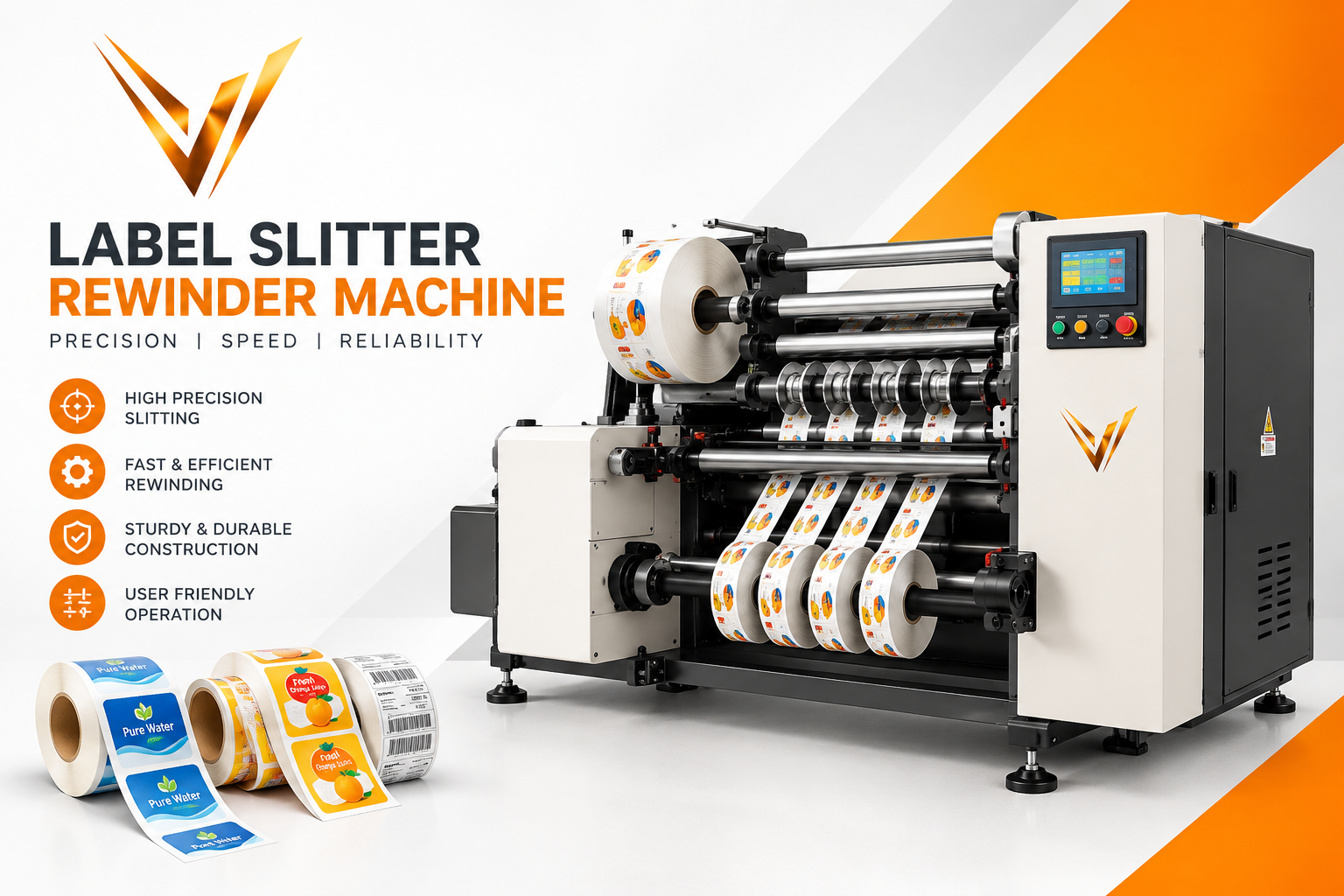
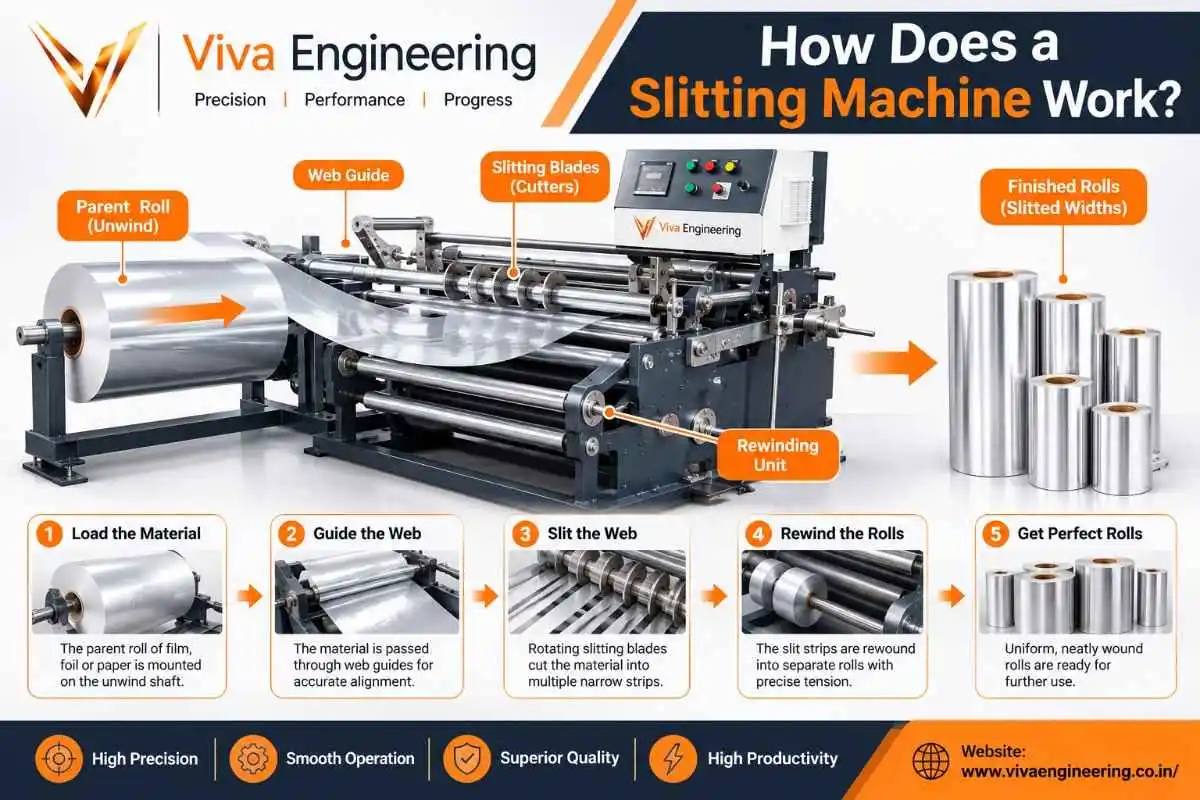
A label slitter rewinder machine unwinds the master roll, runs the web through a slitting section where blades divide it into lanes, and then rewinds each lane onto its own core. Common blade systems include:
• Razor blade slitting: simple and economical, widely used for thin films and light-duty label work. Blades are inexpensive and quick to change.
• Shear slitting: upper and lower knives work like scissors, giving a clean edge on thicker or tougher materials.
• Score (crush) slitting: a blade presses against a hardened roller; suited to certain papers and laminates.
The right choice depends on your material mix, but the goal is always the same: a clean, dust-free edge and accurate lane widths from the first meter to the last.
What Is Inspection Rewinding?
Inspection rewinding is a quality-control step. Instead of focusing mainly on cutting, the machine rewinds an already converted roll, often a printed and die-cut roll, while an operator or a vision system checks it for defects.
Typical things inspected include:
• Print flaws such as smears, color shifts, missing registration or dirt marks
• Die-cut problems such as incomplete cuts, cut-through of the liner, or missing labels
• Matrix or waste issues
• Splices and joins in the web
• Barcode and variable data errors (when a camera or verification system is fitted)
Because the web runs at controlled speed with good lighting, the operator can stop, mark, remove or repair defects before the roll reaches the customer. Many converters also use inspection rewinding to count labels, split long rolls into specific quantities, and re-spool rolls onto new cores.
Slitting vs Inspection Rewinding: The Key Differences
Aspect
Slitting
Inspection Rewinding
Main purpose
Cut wide rolls into narrower rolls
Check and correct finished label rolls
Typical input
Wide master roll or wide printed web
Printed, die-cut label roll
Key components
Slitting knives, lane control, multiple rewind shafts
Inspection table or camera, stop/mark functions, counter
Speed priority
Higher throughput
Slower, controlled speed for visual checking
Quality focus
Width accuracy, clean edges, roll build
Defect detection, count accuracy, clean splices
In practice the two processes complement each other. Slitting sets the dimensions and roll format; inspection rewinding confirms the finished product is fit to ship. Many converters run a combined machine, while others keep dedicated units for each job. Either way, a well-built set of slitter rewinders reduces waste, rework and customer complaints.
Web Guiding: Keeping the Material on Track
If there is one feature that separates a good label slitter rewinder machine from an average one, it is web guiding. Web guiding keeps the material aligned as it travels, so slit lanes and rewound edges stay straight.
Without accurate guiding, you may see:
• Roll edges that are uneven or stepped
• Lanes that vary in width along the run
• Labels drifting out of position relative to the edge
• Damaged edges from rubbing against guides
Most modern machines use an edge sensor or line sensor that detects the position of the web and a motorized actuator that corrects it. For printed material, line guiding or print-mark guiding can keep slitting aligned to the artwork rather than just the physical edge. When evaluating a machine, ask how quickly the guide responds, how well it handles thin films, and how easy it is for operators to set up and fine-tune.
Defect Marking and Handling
Finding a defect is only half the job. What you do with it determines whether the roll is acceptable. A good inspection setup provides ways to flag problems clearly, so nothing is missed downstream.
Common defect-handling methods include:
• Stop and remove: the machine stops at the defect so the operator can cut out the faulty section and splice the web.
• Flagging: a colored flag or tab is inserted at the defect so the customer or next process can see it.
• Marking: ink or label markers indicate the position of a flaw.
• Counting and tracking: a digital counter helps you know exactly how many good labels are on each roll after waste is removed.
Clean splicing matters just as much. A poorly made splice can jam an applicator or tear the web, so a splice table, good tapes and a consistent process are worth the effort. For automated lines, vision systems can detect defects and trigger a stop or mark automatically, improving consistency on long runs.
Roll Quality: What Your Customer Notices
Your customer may never see the slitting blades or the inspection table, but they will notice the roll. Good roll quality usually comes down to a few controllable factors:
1. Tension control: too much tension causes stretching and telescoping; too little produces loose, soft rolls. Look for stable unwind, rewind and, if needed, individual lane tension control.
2. Edge quality: sharp, correctly set blades give a clean cut with no dust, burrs or adhesive bleed.
3. Roll build: rolls should be evenly wound with flat sides, with no telescoping, dishing or ridging.
4. Core and diameter accuracy: consistent core size and roll diameter help rolls fit customer applicators and unwinders.
5. Cleanliness: dust and adhesive residue on the web or rolls can cause print or application problems later.
Simple habits such as regular blade changes, routine calibration of sensors and a clean working environment protect all five.
How to Choose the Right Label Slitter Rewinder Machine
Choosing a machine is easier if you start from your own jobs rather than a spec sheet. Consider these questions:
• What materials do you run? Paper, film, and thick laminates may need different blade types and tension setups.
• What widths and diameters do you need? Check the maximum web width, unwind and rewind diameter, and minimum slit width.
• What speed and volume do you expect? Higher volumes justify faster machines with more automation; short-run converters may prefer flexibility and quick changeovers.
• Do you need slitting, inspection, or both? A combined solution saves floor space, while separate machines can raise throughput.
• How much automation do you want? Options such as digital counters, web guides, automatic tension control and camera inspection can improve consistency, but add cost.
• What about support? Spare parts availability, training and after-sales service are as important as the machine itself.
A reliable manufacturer will ask about your materials, widths and output before recommending a configuration. That conversation is often the best sign you are dealing with a partner rather than just a seller.
Common Mistakes to Avoid
• Running worn or incorrectly set blades because "the job is almost done"
• Ignoring tension changes between different materials
• Skipping web guide calibration when changing stock
• Treating inspection as optional on short runs
• Choosing a machine on price alone without checking support and spare parts
Avoiding these small errors often saves more money than any single piece of equipment.
Final Thoughts
Label slitting and inspection rewinding may happen at the end of the production line, but they decide whether your customer receives a roll that runs perfectly or one that causes downtime. By understanding your label stock, pairing slitting and inspection in the right way, relying on accurate web guiding and building a clear process for defect handling, you can deliver consistently clean, dependable rolls.
If you are comparing options, explore Viva Engineering's range of slitting and rewinding machines to find a label slitter rewinder machine that matches your materials, widths and production goals. Share your requirements with the Viva Engineering team and get guidance on the right configuration for your plant.