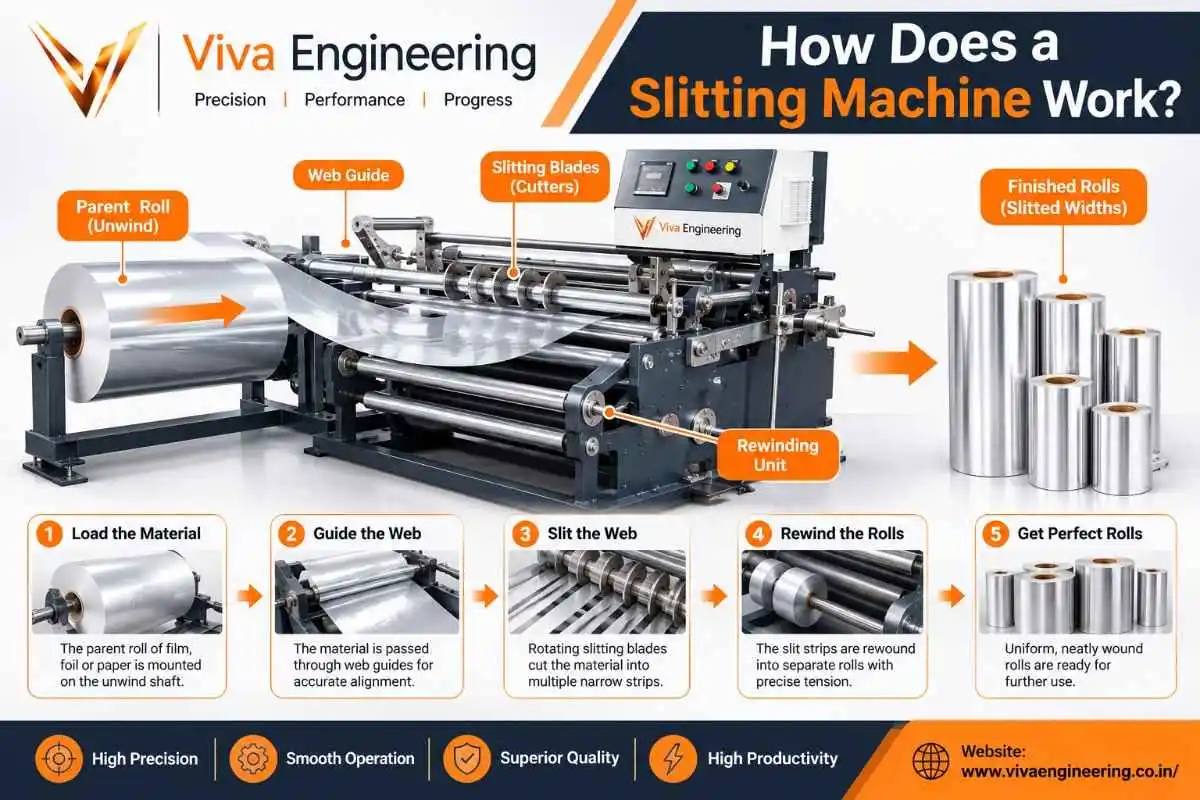
A slitter rewinder is one of the hardest-working machines on a converting floor. It turns wide master rolls of film, paper, foil, or laminates into narrower rolls, and it does this shift after shift. So when budgets are tight, a second hand slitter rewinder machine looks attractive. The price gap between used and new can be large.
But the lowest price on the tag is rarely the lowest cost of ownership. This guide covers the pros and cons of buying used, a practical inspection checklist, the red flags that should make you walk away, and the point where buying new becomes the cheaper option.
Why Buyers Consider a Used Slitter Rewinder Machine
Most people searching for a used slitter rewinder machine for sale have one of three goals:
Lower upfront investment. A used machine can free up capital for raw material, staff, or other equipment.
Faster delivery. Ready stock can be running in days, while a new build takes weeks or months.
A starter machine. Start-ups and small converters often want to test a market before committing to a full-spec line.
These are valid reasons. The risk is that a machine you cannot properly evaluate can turn a saving into a recurring expense.
Pros and Cons of Buying a Second Hand Slitter Rewinder Machine
Advantages
Lower purchase price
Immediate availability
Older mechanical designs are often simple and easy to service
Depreciation has already happened, so resale value is more stable
Disadvantages
Unknown operating history and maintenance record
Worn parts that may not be obvious on a short inspection
Older drives and controls that may be hard to repair
No warranty, or a very limited one
Missing spares and documentation
Lower accuracy and speed than current designs
Possible safety gaps against today’s standards
The decision comes down to whether you can verify the machine’s real condition. That is what the checklist below is for.
Inspection Checklist: What to Check Before You Buy
Never buy a used slitter rewinder machine on photos and a phone call alone. Inspect it in person, or send a technician you trust. Ask for a test run with your own material if possible.
1. Frame and Structure
Look for cracks, weld repairs, or bent side frames.
Check that the machine stands level and does not vibrate at running speed.
Look for rust or corrosion, especially at mounting points and under guards.
2. Unwind and Rewind Shafts
Shafts are among the most important parts to inspect, and among the most expensive to replace.
Check shafts for bending, scoring, and wear on journals and bearing seats.
Spin each shaft by hand and listen for roughness in the bearings.
If the machine uses air shafts, check for leaks and test inflation and deflation of every key or lug.
Confirm core chucks fit snugly and the shaft locks properly.
A shaft with even slight runout will produce telescoping rolls and uneven edges, no matter how good the rest of the machine is.
3. Drive and Motor System
Check the main drive and rewind motors for overheating, unusual noise, and burnt smell.
Inspect belts, gearboxes, and couplings for wear and oil leaks.
Check the electrical panel for scorched wiring, loose terminals, or temporary repairs.
Ask what drive brand and model is installed, and whether spare parts are still available. An obsolete drive can leave you stranded.
4. Tension Control
Tension control decides whether you get clean, firm rolls or wrinkled, loose ones.
Check brakes or clutches on the unwind for even, smooth performance.
If the machine has load cells or dancer arms, see that they respond smoothly and give stable readings.
Run the machine at low and high speed and watch for tension surges during start, stop, and acceleration.
Test with a thin or stretchy material if that is what you run, since these are the least forgiving.
5. Slitting Knives and Blade Holders
Identify the slitting method: razor, shear, or score. Make sure it suits your material.
Check knife holders for play, damage, and smooth position adjustment.
Inspect the anvil or bottom knife for grooves and wear.
Cut a test roll and examine the edge for burrs, dust, or ragged cutting.
Blades are consumables, but the holders, anvils, and positioning system are not. Worn mounts mean poor slit width accuracy.
6. Web Guiding, Rollers, and Alignment
Check idler rollers for flat spots, wobble, and bearing noise.
Make sure rollers are parallel. Misalignment shows up as web wander and edge walking.
If an edge guide or web guiding system is fitted, test it.
7. Safety Features
Check emergency stops, guards, and interlocks.
Confirm all safety devices are still functional and not bypassed.
Consider what upgrades would be needed to meet your factory’s safety requirements.
8. Documentation and Spares
Ask for the manual, electrical drawings, and parts list.
Find out whether the manufacturer or a local service provider can still support the model.
Check if wear parts like bearings, belts, and brake pads can be sourced easily.
Red Flags: When to Walk Away
Be cautious if you see any of the following:
The seller will not allow a test run, or only runs the machine empty.
Fresh paint over a machine with no service history. Paint can hide cracks, leaks, and repair work.
Missing or modified control panels and unlabeled wiring.
Obsolete or unidentified drives and controllers with no spare parts support.
Excessive noise, vibration, or heat at normal operating speed.
Roll quality problems in the test run that the seller blames on “the material.”
The seller cannot explain where the machine came from or why it is being sold.
The price is far below comparable listings. Unusually cheap usually means hidden problems.
One or two minor issues can often be negotiated. Several together usually mean you should keep looking.
Total Cost of Ownership: Look Beyond the Price Tag
When comparing a second hand slitter rewinder machine with a new one, add up everything, not only the invoice.
Costs to include for a used machine:
Purchase price
Transport, dismantling, and reinstallation
Immediate repairs and part replacements
Upgrades for safety or control systems
Higher scrap and rework due to lower accuracy
Downtime for repairs, and the cost of lost orders
Shorter remaining service life
Costs to include for a new machine:
Purchase price
Installation and commissioning
Operator training
Warranty and after-sales support, which reduce your risk in the early years
A used machine that needs new shafts, a drive replacement, and a safety retrofit can quickly close the gap with a new one. Ask for a realistic repair estimate before you agree on a price, and treat it as part of the purchase cost.
When Buying New Is Actually Cheaper
New can be the smarter choice in several situations:
High-volume production. Faster speeds and better accuracy bring down cost per roll, and the savings add up over time.
Tight tolerances or difficult materials. Thin films, laminates, and foils need precise tension control that older machines may not deliver.
Custom requirements. A new machine can be built to your roll widths, core sizes, diameters, and material types, rather than you adapting your process to someone else’s machine.
Long-term plans. If you expect to run the machine for ten years or more, a warranty, spare parts support, and modern controls matter.
Energy and labor savings. Newer machines often have better automation, which can reduce operator effort and waste.
If your inspection turns up significant repair needs, it is worth getting a quote for a new machine before you decide. The comparison may surprise you.