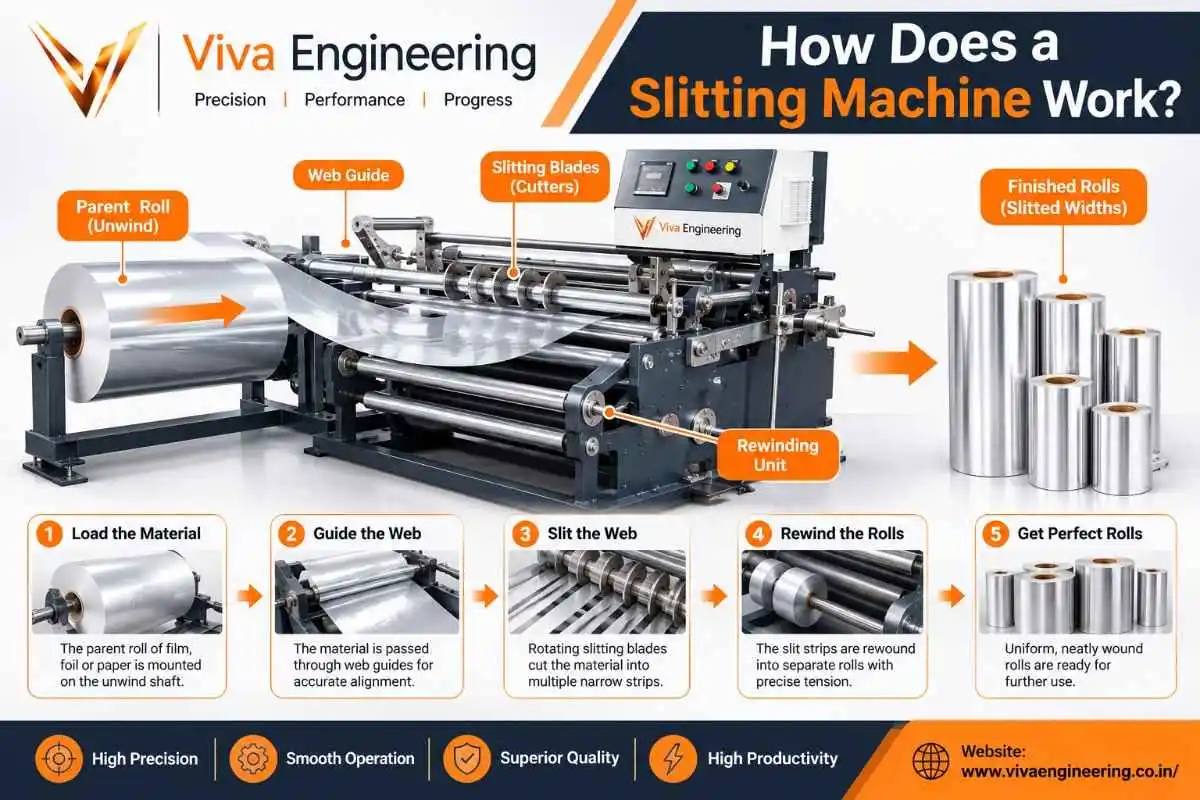
If you are planning to buy a slitting line for paper, film, foil or non-woven rolls, the first question is usually the same: what is the slitter rewinder machine price in India? The honest answer is that there is no single price. Two machines that look similar on a brochure can differ by several lakhs, depending on what is inside them.
This guide explains what drives the cost, how price changes by machine type, whether to buy new or used, which hidden costs buyers miss, and how to get an accurate quote.
What Drives Slitter Rewinder Machine Price in India
1. Working width
Working width is the widest roll the machine can handle. A 650 mm machine uses less steel, smaller shafts and smaller motors than a 1,600 mm machine. As width grows, the frame, rollers and drive system all grow with it, so the slitter rewinder machine price rises steadily.
Buy for the widest roll you realistically expect to run in the next three to five years. Paying a little more now is usually cheaper than replacing the machine later.
2. Machine speed
Speed is measured in metres per minute. A machine rated at 150 m/min needs a simpler drive and braking system than one rated at 400 m/min. Higher speeds need better dynamic balancing of rollers, stronger bearings, and tighter tension control. All of this adds to cost.
Do not pay for speed you cannot use. If your material, operators and downstream packing can only handle moderate speeds, a faster machine is wasted money.
3. Level of automation
Automation is often the biggest price lever. It covers:
Tension control: manual brakes cost less, while closed-loop tension control with load cells gives steadier rolls
Web guiding: helps keep edges aligned and reduces rejection
Auto roll changeover and length counters: save time and reduce operator error
PLC and touchscreen controls: make setup repeatable across jobs
Servo drives: give precise control but cost more than standard AC drives
A basic semi-automatic machine suits stable jobs with a skilled operator. A fully automatic line suits high volumes, delicate films and frequent job changes.
4. Number and type of shafts
The shaft system affects both price and productivity. Key choices include:
Differential air shafts: give even torque on every slit roll and are preferred for films and foils
Standard or lug-type shafts: cost less and work for some paper grades
Number of shafts: a two-shaft setup is common, and extra shafts allow faster changeovers
Air shafts and their accessories add noticeably to the price, but they improve roll quality.
5. Slitting method
Different blade systems suit different materials, and each has its own cost:
Razor slitting: low cost, suited to thin films
Shear slitting: top and bottom knives give clean cuts on paper, foil and laminates
Score (crush) slitting: suited to certain non-wovens and textiles
Shear systems with quality blades and holders cost more than razor setups.
6. Build quality and components
Frame thickness, roller finish, bearing brands, motor and drive brands, and electrical components all affect the final number. A lower quote often reflects thinner structures or lower-grade parts. These can mean vibration, uneven rolls, and more breakdowns over time.
Slitter Rewinder Machine Price by Type
Price ranges depend on width, speed and options, so confirm real figures before publishing them. Add them below.
Machine type Typical use Indicative price
Manual or semi-automatic slitter rewinder Paper, small converters, low volume [Add confirmed range]
Automatic slitter rewinder with PLC Films, foils, laminates, mid volume [Add confirmed range]
High-speed slitting and rewinding machine Large converters, high-volume runs [Add confirmed range]
Custom-built or special-purpose line Non-woven, tapes, special materials Quoted per project
Treat any online figure as a starting point only. The right price depends on your material, roll size and output target.
New vs Used Slitter Rewinder Machines
Advantages of a new machine
Warranty and manufacturer support
Built to your width, speed and core size
Modern controls and safer guarding
Predictable performance and spare parts availability
Why used machines can be risky
A used machine has a lower upfront slitter rewinder machine price, but it brings uncertainty. Check for:
Worn bearings, shafts and blade holders
Outdated drives or controls that are hard to repair
Missing safety guards that do not meet current standards
No documentation or spare parts support
Transport, rewiring and installation costs
Used machines can make sense for trial runs or non-critical work. For regular production, a new machine from a reliable manufacturer usually gives a lower total cost over time.
Hidden Costs Buyers Often Miss
The quoted price rarely tells the whole story. Ask about these before you decide:
Transport and unloading: heavy machines need proper vehicles and cranes
Installation and commissioning: foundation, levelling, power connections and trial runs
Extra shafts and cores: additional air shafts, core chucks and adapters
Blades and spares: a starting stock of knives, holders and wear parts
Compressor and air supply: needed for air shafts and pneumatic functions
Power and electrical upgrades: capacity, cabling and panel needs
Operator training: setup, tension tuning and safe operation
Dust and trim handling: edge trim removal systems for cleaner output
GST and freight: confirm whether the quote is inclusive or exclusive
Comparing two quotes on headline price alone is a common mistake. Compare what each includes.
How to Choose the Right Machine for Your Budget
Before you contact any supplier, write down:
Material type: paper, BOPP, PET, foil, laminate, non-woven
Thickness or GSM range
Maximum roll width and diameter
Core size
Target speed and daily output
Number of slit rolls per job
Operator skill level and available space
This information lets a manufacturer recommend the right configuration instead of selling you a standard model. It also helps you avoid paying for features you will not use.
How to Request an Accurate Quote
A useful quote needs details, not just a request for a rate. When you contact a manufacturer, share:
Your material and thickness range
Maximum working width and roll diameter
Required speed
Level of automation you want
Shaft type and number of shafts
Your location, for freight estimates
Your timeline
Then ask each supplier to quote the same specification, and to state clearly what is included: delivery, installation, training, warranty and spares. Visit a working installation if you can, because seeing the machine run on real material tells you more than a datasheet.
Get a Quote from Viva Engineering
Viva Engineering designs and builds slitting and rewinding machines for Indian converters, with configurations matched to your material, width and output needs. Instead of guessing the slitter rewinder machine price in India from a generic list, share your requirements and we will recommend a suitable machine with a clear, itemised quote.