Nov 18, 2026
Oct 12, 2026 · Viva Engineering

Discover the uses, benefits, and industrial applications of slitting rewinding machines. Learn how these machines improve cutting precision, production efficiency, material handling, and roll quality across packaging, paper, film, and adhesive tape industries.
Slitting rewinding machines are essential industrial machines used to cut large rolls of material into narrower rolls of specific widths. These machines are widely used in the packaging, paper, plastic film, adhesive tape, label, and flexible packaging industries. By combining precise slitting with controlled rewinding, they help manufacturers achieve consistent product quality, reduce material waste, and improve production efficiency.
As industries demand accurate cutting, faster production, and better roll quality, choosing the right slitting rewinding machine has become increasingly important for manufacturers and converters.
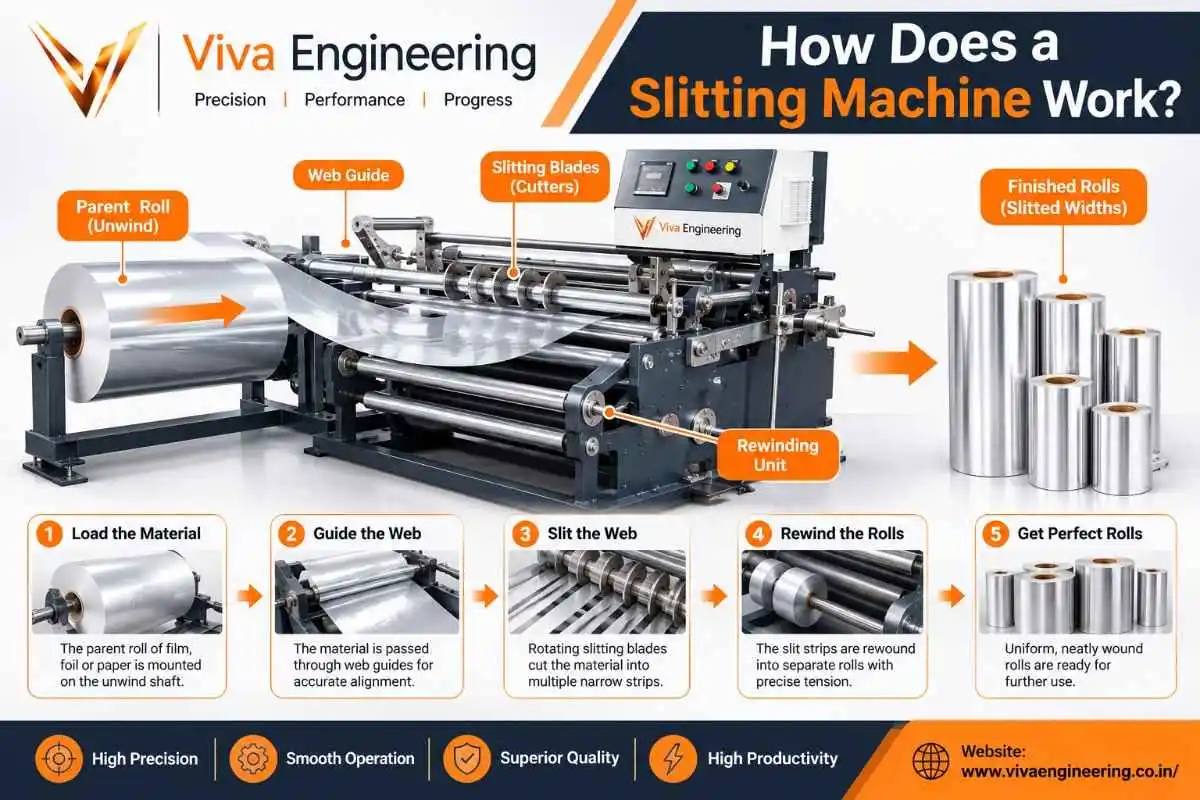
A slitting rewinding machine is an industrial machine designed to slit a wide roll of material into multiple narrower rolls and rewind them onto individual cores. Depending on the material and production requirements, the machine may use razor blades, rotary shear knives, or crush-cut knives.
Modern slitting rewinding machines can process materials such as BOPP film, adhesive tape, paper, plastic film, laminates, aluminium foil, and other flexible materials. Machine configuration, cutting technology, tension control, and automation levels vary according to the application.
The working process generally involves the following steps:
Automated systems may also include edge guiding, digital controls, automatic tension adjustment, and other features to improve process consistency.
Slitting rewinding machines are widely used in adhesive tape production. Large jumbo rolls of BOPP tape, masking tape, double-sided tape, and other adhesive materials are converted into smaller rolls according to customer requirements.
Accurate slitting helps manufacturers maintain consistent tape widths and achieve neat, uniform winding.
Flexible packaging manufacturers use slitting rewinding machines to process printed and unprinted films, laminated materials, and packaging webs. These machines prepare materials for subsequent packaging operations by converting large rolls into narrower rolls suitable for production lines.
Paper mills, paper converters, and packaging manufacturers use slitting rewinding machines to cut large paper rolls into smaller widths. Applications include wrapping paper, industrial paper, specialty paper, and other roll-based paper products.
Manufacturers working with BOPP, PET, PE, PVC, and other suitable plastic films use slitting rewinding machines to produce rolls in different widths. The appropriate machine design helps maintain cutting accuracy and winding quality while reducing defects caused by improper tension or handling.
Label manufacturers use slitting rewinding equipment to convert wide labelstock rolls into narrower rolls for printing, die-cutting, and labelling operations. Depending on the material, the process may involve slitting adhesive label materials, release liners, or other web-based products.
Suitable slitting rewinding machines can process aluminium foil and other specialty materials that require controlled tension and accurate cutting. Machine selection depends on material thickness, width, surface characteristics, and the required finished-roll specifications.
Properly configured slitting rewinding machines deliver consistent cutting widths and help manufacturers meet product specifications. Accurate slitting is particularly important when materials must fit downstream converting or packaging equipment.
Automated unwinding, slitting, and rewinding operations reduce manual handling and help manufacturers process large material rolls efficiently. Depending on the machine configuration, production requirements, and material properties, higher operating speeds may also be possible.
Accurate blade positioning, suitable tension settings, and correct machine setup help minimize trimming losses and material defects. Reducing waste can improve material utilization and support more cost-effective manufacturing.
Proper tension control and rewinding settings help produce rolls with consistent winding tightness and fewer defects. Good roll quality supports easier transportation, storage, and use in subsequent production processes.
A suitable slitting rewinding machine allows manufacturers to produce different roll widths according to customer orders. This flexibility is valuable for businesses serving multiple industries and handling varying production requirements.
Depending on the level of automation, these machines can reduce repetitive manual operations during material feeding, cutting, and rewinding. This can improve workflow efficiency and help operators manage production more effectively.
By converting parent rolls into specified finished-roll sizes, manufacturers can prepare materials for different customers and downstream processes. This supports organized inventory management and more predictable production scheduling.
Designed for processing BOPP adhesive tape jumbo rolls into smaller tape rolls. These machines are commonly used by adhesive tape manufacturers and converters.
Used for slitting and rewinding paper rolls into narrower widths for printing, packaging, and industrial applications.
Suitable for processing compatible plastic films and flexible packaging materials. Features vary according to film thickness, web width, and winding requirements.
Automatic models incorporate selected automation features to reduce manual intervention and improve repeatability. Depending on the design, features may include programmable controls, automatic tension systems, and automated roll handling.
These machines combine slitting and rewinding with inspection operations, allowing manufacturers to examine material quality while converting rolls. They are useful for suitable printed films, labels, and other materials where defect identification is important.
Slitting rewinding machines support a wide range of manufacturing and converting industries, including:
Selecting the right machine requires an understanding of your material, production volume, and finished-roll requirements. Consider the following factors before making a purchase:
Slitting rewinding machines play an important role in modern manufacturing by converting wide material rolls into accurately sized finished rolls. Their applications span adhesive tape, flexible packaging, paper, plastic film, labels, and other roll-based products.
With the right machine configuration, manufacturers can improve cutting precision, maintain consistent roll quality, increase production efficiency, and reduce avoidable material waste. Evaluating your material specifications, output requirements, and automation needs is the best way to select a slitting rewinding machine suited to your business.
If you are planning to upgrade your production facility or establish a new converting line, explore suitable slitting rewinding machine options and compare their technical specifications before making your decision.
SEOPlease provide your details below and our experts will get in touch with you shortly.