Stretch film looks simple, but it is one of the harder materials to convert. It is thin, soft, tacky and highly elastic, so a small mistake in tension, speed or core handling shows up quickly as a bad roll. If you run a stretch film slitter rewinder machine, you have probably dealt with telescoping rolls, soft edges, wrinkles or film that clings to everything. This guide covers why these problems happen and which settings usually fix them.
Why Stretch Film Is Tricky
Most stretch film is made from LLDPE and is produced in thin gauges. Unlike BOPP or PET, it is made to stretch, and that elasticity is what causes trouble during rewinding.
It stretches under tension. Too much pull on the web narrows the film and stores stress in the roll. The roll can then relax and loosen days later.
It is tacky. Cling-type films stick to rollers, to themselves and to the core, so the web can wrap around a roller or tear.
It builds static. Unwinding and slitting generate charge, which attracts dust and makes edges flutter.
It is thin. Small gauge variations in the jumbo roll translate into hard bands and soft spots in the finished roll.
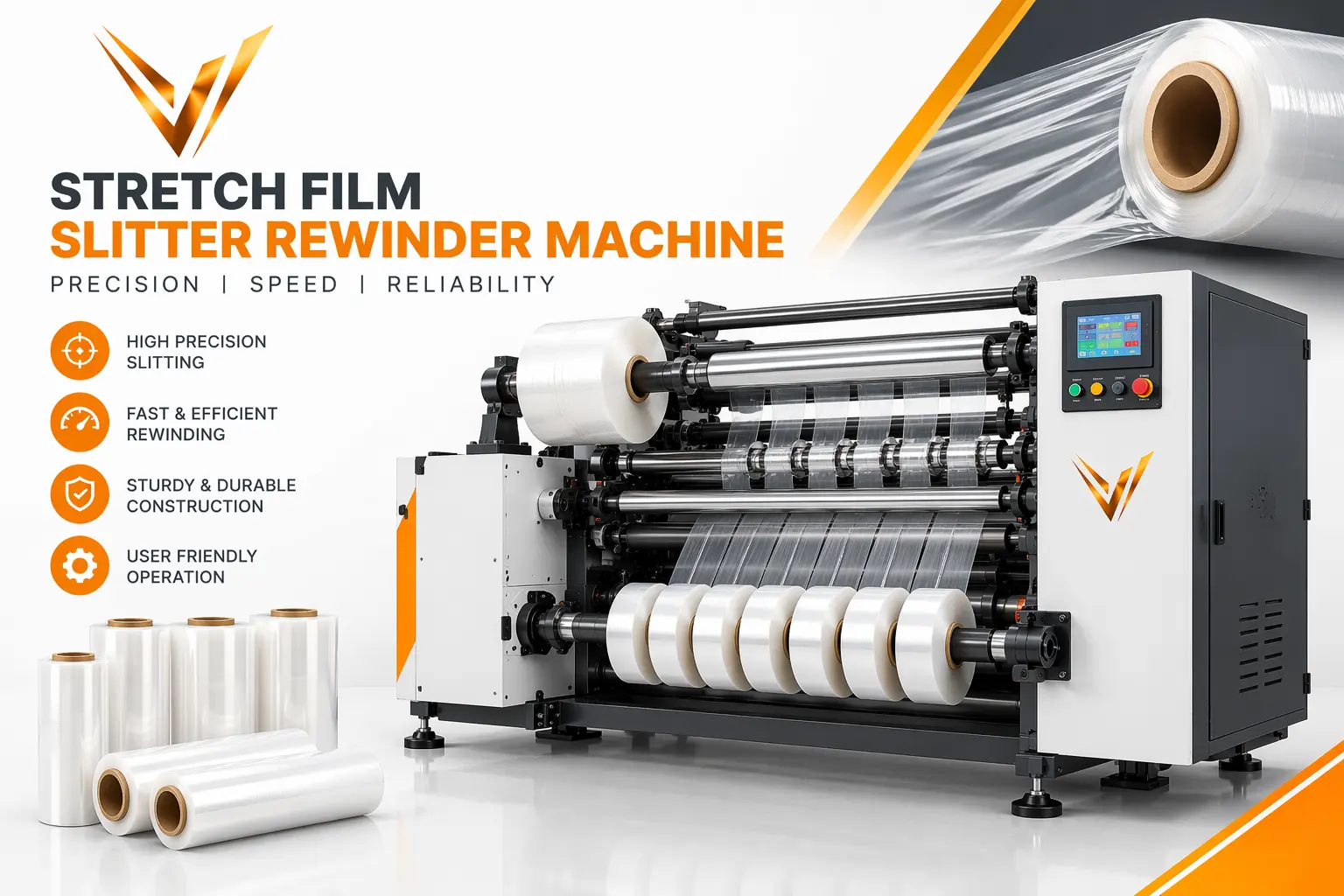
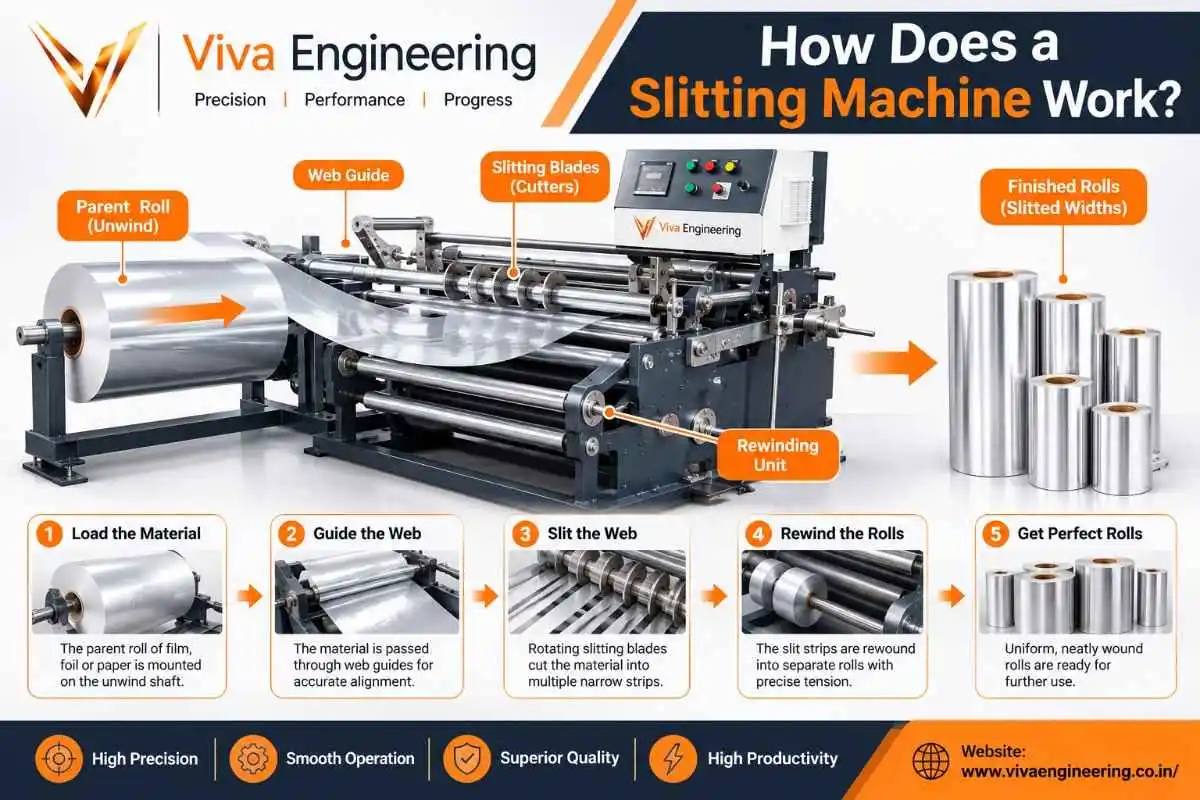
A film slitter rewinder machine for this material needs smooth unwinding, precise tension control and a gentle rewinding profile. The right settings matter as much as the machine itself.
Telescoping and Soft Rolls
Telescoping happens when layers slide sideways, so the roll centre pushes out like a telescope. Soft rolls have too little wound-in tension, so they feel spongy and can collapse under their own weight.
Common causes:
Wind-in tension that is too low for the film gauge
Tension that does not taper correctly as the roll diameter grows
Uneven contact pressure from the lay-on roller
Misaligned shafts or rollers, so the web tracks to one side
Gauge variation or an uneven jumbo roll
How to fix them:
Use taper tension. Start with slightly higher tension at the core and reduce it as the diameter grows. This keeps the outer layers from crushing the inner ones.
Check lay-on roller pressure. Too little pressure lets air in and makes the roll soft. Too much pressure stretches the film and creates hard edges. Adjust in small steps and test.
Align the machine. Check that unwind, idler rollers and rewind shafts are parallel. Even a small misalignment causes edge wandering.
Inspect the jumbo roll. If the incoming roll has hard bands or poor edges, no setting will fully correct it.
If you are comparing machines, ask how tension is controlled. A well-built stretch film rewinding machine with closed-loop tension control handles taper far more consistently than one that relies on a manual friction brake.
Static
Static is a daily nuisance in stretch film rewinding. It pulls dust onto the film, makes narrow slit rolls misbehave and can cause small electric shocks for operators.
Ways to reduce it:
Install static eliminators (bars or ionising units) near the unwind and just before the rewind.
Keep humidity in the plant in a reasonable range, since very dry air makes static worse.
Ground the machine properly and make sure rollers are earthed.
Keep the film path short and avoid unnecessary wraps around rollers.
Clean rollers regularly so dust and film residue do not build up.
Static control is cheaper to add early than to retrofit after problems appear.
Core and Tension Settings
Cores are often overlooked, but they influence roll quality directly.
Core selection and handling
Use cores with consistent diameter and a clean, square cut. A damaged or out-of-round core produces vibration and uneven winding.
Make sure the core fits the shaft well. A loose core can slip, and an overtight one is hard to remove without damaging the roll.
For narrow hand rolls, keep core width and slit width matched so the film does not overhang.
Tension settings
There is no single correct number, because it depends on film gauge, width, type (hand or machine) and roll size. As a general approach:
Start with a low tension and increase gradually until the roll is firm but not stretched.
Run a short test roll and check it. It should feel uniform, have flat edges and not deform when pressed.
Let the roll rest for a few hours and check again, since stretch film can relax after winding.
Record the working settings for each film type and gauge so the next run starts from a known point.
Slitting
Use sharp blades suited to thin film. Dull blades drag and create rough or stretched edges.
Set blade positions carefully, since stretch film tends to wander if the cut is not clean.
Check for slit-edge quality under light. Fuzzy edges often point to blade wear or incorrect blade penetration.
Speed
It is tempting to run fast to increase output, but speed and quality are closely linked in stretch film.
Too fast and the film flutters, static increases, tension swings and air gets trapped between layers.
Too slow and you lose productivity without necessarily improving the roll.
A good practice is to start at a moderate speed, confirm that tension and edges are stable and then increase in steps. Pay attention to acceleration and deceleration too. Sudden changes cause tension spikes, which show up as marks or loose bands in the roll. Machines with smooth ramping and good drive control are far more forgiving.
When you evaluate slitter rewinder machine price, remember that a lower upfront cost can mean limited tension control and slower usable speeds. A machine that holds quality at a higher speed often pays for itself through less waste and fewer rejected rolls.
Maintenance
Even the best settings will drift if the machine is not maintained. A simple routine prevents most rewinding faults.
Daily
Clean rollers, shafts and the film path of dust, residue and film scraps
Check static eliminators are working
Inspect blades and cores before starting
Weekly
Check roller alignment and parallelism
Check lay-on roller surface and pressure
Verify tension readings against known values
Monthly or as scheduled
Lubricate bearings and moving parts as recommended
Inspect brakes, clutches and drive components for wear
Check shaft runout and replace worn parts
Keep a log of settings and faults. Over time it becomes a useful guide to which film types need special handling and when wear starts to affect quality.
Quick Troubleshooting Guide
Problem Likely cause First thing to try
Telescoping Low or unbalanced tension, misalignment Adjust taper tension and check alignment
Soft roll Low wind-in tension, low lay-on pressure Raise tension slightly and increase contact pressure
Hard edges Excess lay-on pressure Reduce pressure
Wrinkles Roller misalignment, uneven web tension Realign and check rollers
Dust and flutter Static Add or adjust static eliminators
Rough edges Dull blades Replace or re-set blades
Choosing the Right Machine
If stretch film is a core part of your business, look for a machine designed for thin, elastic film rather than a general-purpose unit. Useful features include precise tension control, adjustable taper, smooth drives, stable lay-on roller pressure, easy core loading and good slitting accuracy.
At Viva Engineering in Ahmedabad, we build slitting and rewinding machines for plastic films and related materials, and we can help you match the machine configuration to your film type, widths and output targets. You can see our range here: plastic slitting and rewinding machines.
Final Thoughts
Good stretch film rewinding comes down to controlling tension, keeping the web stable and maintaining the machine. Fix telescoping and soft rolls with taper tension and correct roller pressure, control static with proper elimination and grounding, and choose a sensible speed instead of the maximum one. With consistent settings and regular maintenance, a stretch film slitter rewinder machine delivers firm, clean rolls with less waste.
Need help with a specific rewinding problem or choosing a machine? Contact Viva Engineering and our team will guide you.